


Where are Kabrita® formulas produced?
All Kabrita® formulas are produced in the Netherlands from mild goat milk sourced from farms located no more than a two-and-a-half-hour drive from the farm to the factory. This helps preserve mild taste and nutritional value of the goat milk to the maximum extent. The farms that supply us with milk operate under exclusive supply contracts and adhere to uniform quality standards.
Do Kabrita® products contain added sugar?
Kabrita® formulas, porridges, and purees do NOT contain sugar nor its substitutes, including maltodextrin.
A small amount of cane sugar is present in the biscuits; its level is minimal and complies with WHO recommendations. Compared to other baby biscuits on the market, the sugar content in Kabrita® biscuits is the lowest, at 0.8 grams per biscuit.
Does Kabrita® contain palm oil? What is beta-palmitate?
Kabrita® formulas do not contain palm oil. Our formulas contain palmitic acid – beta-palmitate, but this is NOT palm oil. Palmitic acid is one of the main fatty acids in breast milk, and in maternal milk this acid has a special structure (palmitin in the middle position on the glycerol backbone – beta-palmitate), which is not available in any vegetable oil that replaces animal fats in infant nutrition.
Kabrita® uses a special DigestX® complex, in which palmitic acid, as a separate fraction of palm or coconut vegetable oil, undergoes gentle breakdown. As a result, it becomes identical to the beta-palmitate found in breast milk. It is the high content of beta-palmitate that helps soften stool, improves the composition of the microbiota, supports the skeletal system, and, in fact, helps the baby absorb essential fats from nutrition. Thanks to this, the baby cries less and sleeps much better.
Who are Kabrita® formulas best recommended to?
Kabrita® suits many babies. Goat milk and goat milk-based products are well digested and tolerated. This promotes more comfortable digestion for the baby and can sometimes help reduce the symptoms of allergic reactions. However, Kabrita® formulas, like all other goat milk-based formulas or goat milk itself, are not therapeutic (specialized) nutrition and cannot be used to prevent food allergies, nor for feeding children with a cows' milk protein allergy. Be sure to discuss the choice of formula with your doctor.
Is goat milk an alternative for a cows' milk protein allergy? Can you still have goat milk if you are intolerant to cows' milk?
No, if someone has a cows' milk allergy, goat milk can also trigger an allergic reaction. A cows' milk allergy results from a reaction to the protein in cows’ milk. Although the proteins in goat milk differ significantly in structure and properties from those in cows’ milk, due to the risk of cross-allergy, we strongly advise against consuming goat milk as an alternative product when a cows' milk allergy has been confirmed.
Fortunately, however, a true cows' milk allergy is quite rare – only 1% to 3% of children under 6 years of age have this condition. In reality, a much larger number of people experience discomfort from consuming cow's milk. Sometimes people have what is called a cows' milk intolerance, where components of the milk – fats, proteins, or a combination of both – are poorly absorbed by the body. These individuals can often drink goat milk; moreover, when switching to goat milk, they frequently find relief from these symptoms. However, any dietary choice for an infant with digestive issues or special dietary needs must be discussed with their doctor.
How is the quality and safety of Kabrita® GOLD formula production controlled?
In the Netherlands, the state places special emphasis on the development of the dairy industry – a special governmental body for quality control of milk and dairy products (COKZ) has developed strict standards and quality control systems. This body is responsible for monitoring farms and producers across all parameters of milk production and processing.
In addition, all farms supplying goat milk operate under the high-tech "Kwaligeit" quality control system, which defines clear criteria for goat keeping, as well as for the collection, storage, and transport of milk.In addition, all farms supplying goat milk operate under the high-tech "Kwaligeit" quality control system, which defines clear criteria for goat keeping, as well as for the collection, storage, and transport of milk.
Why do Kabrita® formulas and porridges contain nonfat dry goat milk instead of whole milk?
The composition of Kabrita formulas is designed to ensure not only a balanced protein profile but also an optimal fat profile. Babies need fat, but it must be digestible for their developing organisms. Animal milk fat does not align with infant physiology. When preparing formulas, animal milk fats are adapted to bring them closer to the profile of breast milk. Therefore, Kabrita formulas combine the protein of nonfat goat milk with the unique DigestX® fat blend, a source of highly valuable β-palmitate.
Why may the composition of the same product differ from country to country?
The composition and nutritional value of formulas are regulated by WHO guidelines and the legislation of individual countries. It doesn’t always align with WHO requirements, which leads to minor differences in the composition of formulas across different countries.
Kabrita formulas sold in Russia and the Customs Union countries comply with Russian legislation and standards.
When planning a trip with your child, it is important to note that the composition and nutritional value of the product may vary from country to country, as the priority in developing the formulation and nutritional value is the legislation of the country where the product is sold. Thus, products manufactured for the USA, European Union countries, Russia and the Customs Union countries, and China may differ slightly in composition and nutritional value. This is a standard practice for all infant formula brands.
Where can I buy Kabrita® products?
In the Russian Federation, Kabrita® products are available in almost all major federal and regional retail chains, online stores, and pharmacies. You can also place an order in our official online store at https://www.kabrita.ru/shop/ If for any reason you cannot find our products in a store near you, you can order them from any major marketplace or your nearest pharmacy. We are the sole official distributor of Kabrita in Russia, so you can confidently purchase products from our sales partners on marketplaces.
Our products are supplied to retailers at wholesale prices, to which the store adds its own retail markup. You may often see discounts on our products. Such discounts are established either by mutual agreement or at the initiative of the store itself.
What makes goat milk similar to breast milk?
Research has shown that in terms of protein composition and structure, goat milk is closer to human breast milk than cow milk. Studies have confirmed that goat milk is digested and absorbed at a rate similar to that of breast milk. Moreover, goat milk and formulas based on it are digested and absorbed faster and more easily than cow milk and cow milk-based formulas (1). This is especially important during the period of active development of a baby’s digestive system.
Goat's milk and breast milk belong to the same type of milk – A2 milk – and are produced through the same apocrine type of secretion. Apocrine secretion results in a larger number of cellular elements, including active nutrients, entering the milk (2).
* Maathuis, A., et al., Protein Digestion and Quality of Goat and Cow Milk Infant Formula and Human Milk Under Simula ted Infant Conditions. J Pediatr Gastroenterol Nut r, 201 7. 65(6): p. 6 6 1 -666
** Prosser C. G., Characteristics and benefits of goat milk as a base for infant formula. Paper presented to the Perinatal Society of Australia and New Zeeland Zeland (PSANZ) Conference, Adelaide, Australia, 2005
What are the main benefits of goat milk?
Thanks to the unique qualities and structure of its protein, goat milk is closer to breast milk than to cow milk. Goat milk and products based on it are digested faster and more easily than cow milk, forming a softer protein curd in the baby stomach. This promotes more comfortable digestion of the formula and softer stools. Moreover, it soothes discomfort, especially when breastfeeding is stopped or reduced. Goat milk, like breast milk, belongs to the A2 type due to the characteristics of its protein.
What is the difference between A1 and A2 casein?
Milk casein consists of different fractions. One of these fractions or types (β-casein) has a different structure and qualities in goat milk and cow milk. β-casein is a chain of amino acids. The amino acid at position 67 of this chain determines the type of milk – A1 or A2.
A1 milk – at position 67 of the chain is HISTIDINE.
A2 milk – at position 67 of the chain is PROLINE.
During the digestion of A1 milk, histidine leads to the formation of beta-casomorphin (BCM-7), which is thought to make cow milk difficult to digest. During the digestion of A2 milk, BCM-7 is not formed. This is one of the reasons why goat's milk is so well digested and is an optimal solution for people with poor tolerance (not to be confused with allergy!) to cow's milk.
The type of milk based on the presence and type of β-casein is confirmed by special laboratory tests.
The fact that goat's milk in Kabrita® formula belongs to an A2 milk-based formula has been confirmed by research from the renowned international laboratory Eurofins Technologies.
Which breed of goat produces the best milk?
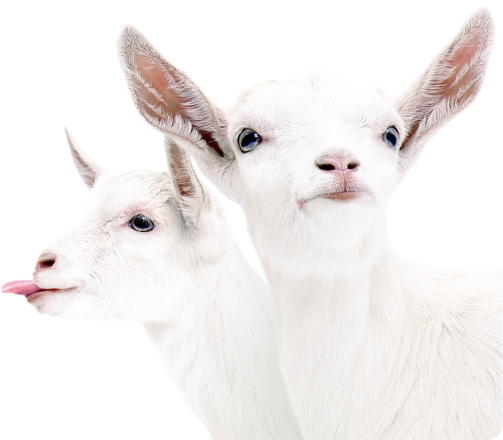
When visiting a goat farm in the Netherlands, you may notice that over 90% of the goats are white. These are Saanen dairy goats. The milk of these elegant snow-white goats is known for its high quality, mild creamy taste, and high nutritional value.
What are the key factors for achieving exceptional milk taste and quality?
To achieve impeccable milk taste and quality, it is necessary to provide prefect living conditions and hygiene for the animals, including separate housing for males and females, as well as high-quality balanced feed and clean running water.
What do our goats feed on?
The daily diet of goats is calculated based on the age and weight of the animals, the season, and many other factors. The feed for the farms is prepared by the farmers themselves, and is also purchased from feed manufacturers who produce and supply the farmers with nutrition made from fruit and vegetable pulp, as well as from silage with added fiber. A mixture of straw, pulp, hay, fresh grass (depending on the season), and silage, together with vitamin and mineral supplements, makes up the daily ration of our goats.
How do we keep our goats?
There are 350 goat farms in the Netherlands, and our company has exclusive supply agreements with 75 of them. Moreover, our company is the only one in the Netherlands that produces baby food based on natural Dutch goat milk.
Goat housing conditions are a critical factor in producing milk that is both nutritious and flavorful. A typical modern farm houses between 1,000 and 1,300 animals. The barns are spacious and feature opening glass roofs. This design is no accident Saanen goats are delicate and sensitive creatures that cannot tolerate drafts or rain. As a result, they spend most of their time indoors and only graze outside in warm, sunny weather. Moreover, fresh grass alone is not enough to produce high-quality milk, especially given the growing concerns among scientists about soil depletion and declining nutritional value of pasture. That's why farms place such a strong emphasis on carefully balanced feeding programs. Another essential factor is clean, running drinking water. An average goat drinks 12 to 13 liters per day, which is why all farms are equipped with systems that ensure a constant supply of fresh water.
Каждая ферма обслуживается ветеринаром, который регулярно, по определенному расписанию осматривает животных и, в случае необходимости, назначает лечение. На период медикаментозного лечения козы изолируются от стада и их молоко не идет в общую копилку.
Each farm is under the care of a veterinarian who conducts regular, scheduled health checks and prescribes treatment when needed. During any medical treatment, the affected goats are isolated from the herd, and their milk never enters the common supply. All livestock in the Netherlands are registered in national databases that track every animal's lineage, name, age, weight history, diet, milk yield, routine medical records, and any treatments. Sales and purchases are also recorded. This system supports breeding control and milk quality. A pedigree Saanen goat can cost anywhere from €5,000 to €20,000 – they are genuine assets, and farmers treat them with the utmost care.
Every task on the farm – from preparing feed and milking to cleaning the barn and managing water supply – is fully automated.
The farm is typically run by all adult members of the farming family. Outside help is rarely used. After all, how could you entrust your livelihood to strangers? Children grow up knowing that one day they will take over the farm, carrying full responsibility when their parents can no longer manage. Families often have several children, raising future helpers. Our farmers work almost without holidays, devoting their entire lives to daily labor. The country has a deep-rooted sense of historic, almost guild-like pride in hard work and its rewards.
Kabrita – made with love in the Netherlands.
How do we control the quality of raw goat milk?
The process of collecting, storing, and transporting goat milk is overseen not only by the ‘Kwaligeit’ quality control system. We have also established our own strict milk testing requirements. A dedicated system is in place for transporting and receiving raw milk at the factory. Milk is transported in specialized refrigerated tankers that maintain a constant temperature. Before the milk is loaded into the tanker, the driver – who holds special qualifications – performs rapid on-site tests to measure nutritional values (proteins, fats, and carbohydrates) and checks for the absence of antibiotics and pesticides. Before the milk is accepted, the factory's in-house laboratory also analyzes the quality and safety of the raw material across an extensive range of parameters. Fresh milk then goes straight into production.
What’s a ‘Kwaligeit’ quality control system?
‘Kwaligeit’ is a state-run quality control system for goat milk manufacturers, which monitors the following processes:
• Collection, storage, and transportation of milk;
• Sanitary standards for animal housing and care;
• Medical treatment and medication use protocols;
• Animal diet, feeding schedule, and feed quality;
• Provision of clean drinking water to the animals.
What GRAS stands for?
The milk and goat whey concentrate used to produce Kabrita products are included in the GRAS* list (GRN No. 644) as a safe source of protein for manufacturing infant formulas for healthy children from birth. This further confirms the exceptionally high quality of the raw materials used in Kabrita products.
This determination was made in accordance with Section 201(s) of the FDA** based on the submitted scientific evidence and the consensus of an expert panel.
To date, Kabrita is the only goat milk-based formula to have received this high recognition from FDA experts.
*Generally Recognized as Safe – a food safety status granted by the U.S. Food and Drug Administration (FDA)..
** FDA – the Food and Drug Administration. This organization analyzes food samples for various harmful substances, including pesticides, radionuclides, and chemical additives. Additionally, the FDA verifies the accuracy of information presented on food product labels..
Undoubtedly, Kabrita® is the leader on the market of goat milk-based baby food. But why are we so loved by moms all over the world?
According to Frost & Sullivan, Kabrita® (Stage 1, 2, and 3 formulas) accounted for 15.4% of global goat milk formula sales in 2023. The research covered data from 2020 to 2023 and confirmed the brand’s leadership over four consecutive years, reaching this market share by the end of 2023.
Kabrita® formulas based on wholesome goat milk have been available in Russia since 2012. Studies have demonstrated improved and faster digestibility of Kabrita® formulas, with digestion comparable to breast milk and superior to cow milk-based formulas**. International and Russian clinical studies have confirmed the positive effects of these formulas on infant digestion, including reduced frequency and severity of colic, regurgitation, and constipation, fewer and less intense crying episodes, and longer sleep duration. 9 out of 10 mothers who fed their children with Kabrita® formulas reported good tolerability and positive digestive effects***.
* Frost & Sullivan, 2023 report “Global Goat Milk Powder Industry Research” (https://www.frost.com/)
** Maathuis, A., et al., Protein Digestion and Quality of Goat and Cow Milk Infant Formula and Human Milk Under Simulated Infant Conditions. J Pediatr Gastroenterol Nutr, 2017, 65(6): 661–666
*** https://www.kabrita.ru/vracham/novosti-nauki/ Report on the Observational Program “Tolerability of Kabrita® GOLD Formulas,” 2016
What makes Kabrita® formulas unique?
Kabrita® are modern formulas based on wholesome farm-sourced A2 goat milk from the Netherlands.
Kabrita® formulas are distinguished by:
• A high content of valuable whey protein (63% in Stage 1), exceeding the market average in the goat milk formula segment.
• The DigestX® fat complex, containing a high level (42%) of β-palmitate. It closely resembles the fat profile of breast milk. DigestX® supports easier digestion, helps reduce the risk of constipation, promotes softer stools, enhances calcium absorption, and supports the growth of beneficial gut bacteria.
• A combination of prebiotics (GOS + FOS) and the probiotic Bifidobacterium BB-12, which contribute to improved digestion and immune support.
• Polyunsaturated fatty acids ω-3 and ω-6. Clinical studies show that enrichment with DHA and ARA supports brain and visual development..
• Naturally occurring nucleotides from goat milk, supporting efficient energy metabolism and immune function.
• Natural goat milk oligosaccharides, which help support the development of the body’s natural defenses.
Why is goat milk whey used in Kabrita® formulas?
Milk proteins come in two types – casein and whey. Different types of milk have different casein-to-whey ratios, but together they always make up 100%. Breast milk contains approximately 60% whey and 40% casein, while animal milk differs significantly. For example, cow milk consists of about 80% casein and 20% whey.
Adding whey proteins adjusts the casein-to-whey ratio in Kabrita® formulas to more closely match that of breast milk. This provides key benefits and advantages of Kabrita® formulas:
• Supports comfortable digestion;
• Contributes to the development of the immune system;
• Enriches the formula with naturally occurring amino acids.
Who are Kabrita® formulas recommended for?
Kabrita® goat milk-based formulas are recommended:
• As a first-choice product for a gentle and smooth transition from breastfeeding to mixed or formula feeding;
• For the daily nutrition of healthy infants from birth;
• For the daily nutrition of healthy infants with mild gastrointestinal discomfort (such as constipation, regurgitation, colic, or diarrhea) that does not require specialized medical nutrition.
Kabrita® formulas are a well-balanced and complete alternative to traditional cow milk-based formulas. It is recommended to consult a pediatrician when choosing a formula for your child.
Why do we call our formulas “adapted”?
Animal milk differs from breast milk in most parameters – proteins, fats, carbohydrates, and vitamin-mineral composition. Infants are physiologically unable to properly digest and absorb unmodified animal milk. That is why young children should be fed only breast milk or adapted infant formulas. Animal milk is modified (adapted) in terms of its carbohydrate, fat, protein, and vitamin-mineral composition to bring it closer to the nutritional profile and value of breast milk. This adaptation is achieved by adding specific nutrients in carefully balanced concentrations to approximate the composition of breast milk.
How to prepare Kabrita® formula?
Carefully read the instructions on the product packaging. Please note:
• Always prepare the formula immediately before feeding.
• Sterilize the bottle and nipple by boiling for 10 minutes.
• Pour the specified amount of boiled water into the bottle and allow it to cool to no more than 40°C.
• Add the exact amount of formula according to the feeding table on the packaging.
• Mix thoroughly with gentle circular motions (at least 20 times), then shake well with the bottle closed. Before feeding, test the temperature on the inside of your wrist – it should feel comfortably warm.
How many servings are there in one can of formula?
This depends on the volume of prepared formula and your baby’s feeding schedule. On average, one 800 g can of powdered formula yields nearly 6 liters of prepared formula. General preparation guidelines are provided on the product packaging. Your pediatrician can always recommend the optimal feeding schedule for your baby.
How long will one can of formula last?
This depends on the volume of prepared formula and your baby’s feeding schedule. On average, one 800 g can of powdered formula yields nearly 6 liters of prepared formula. General preparation guidelines are provided on the product packaging. Your pediatrician can always recommend the optimal feeding schedule for your baby.
How do you transition to Kabrita® formula?
Pediatricians recommend a gradual transition when switching from one formula to another, as well as when moving from one feeding stage to the next, since each formula differs in its content of proteins, fats, and carbohydrates.
Your baby should adapt to the new composition step by step. If any issues arise – such as changes in stool color, digestive discomfort, irregular bowel movements, regurgitation, rashes, or other symptoms – it is recommended to consult a doctor to determine the cause.
At what age should you switch from Kabrita® 1 to Kabrita® 2? Is Kabrita® 1 suitable for a baby older than 6 months?
Kabrita® 1 GOLD, Kabrita® 2 GOLD, Kabrita® 3 GOLD, and Kabrita® 4 GOLD contain the same ingredients, but differ in the quantitative composition of nutrients.
The nutritional profile of each formula is designed to meet the physiological needs of children at specific stages: from birth to 6 months, from 6 to 12 months, and from 12 and 18 months onward. Timely transition from Kabrita® 1 to Kabrita® 2 ensures that your baby receives the appropriate amount of nutrients required for the 6-12 month age range. Our specialists recommend a gradual transition when switching formulas to allow the baby to adapt smoothly to the next stage.
What are milk drinks for children over one year old for?
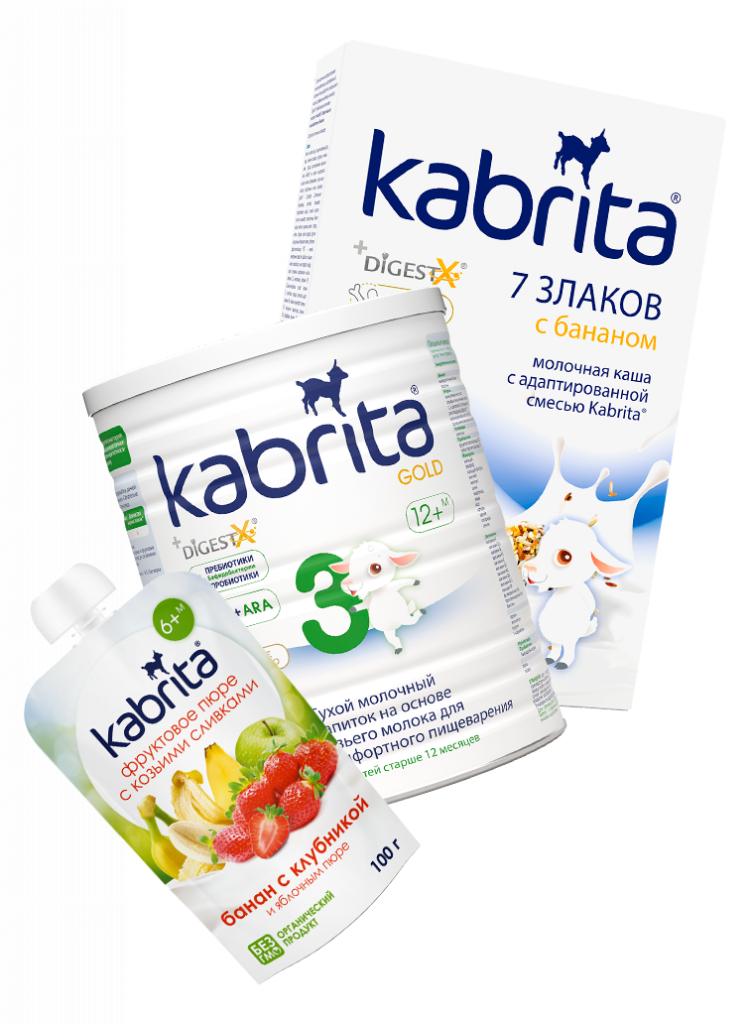
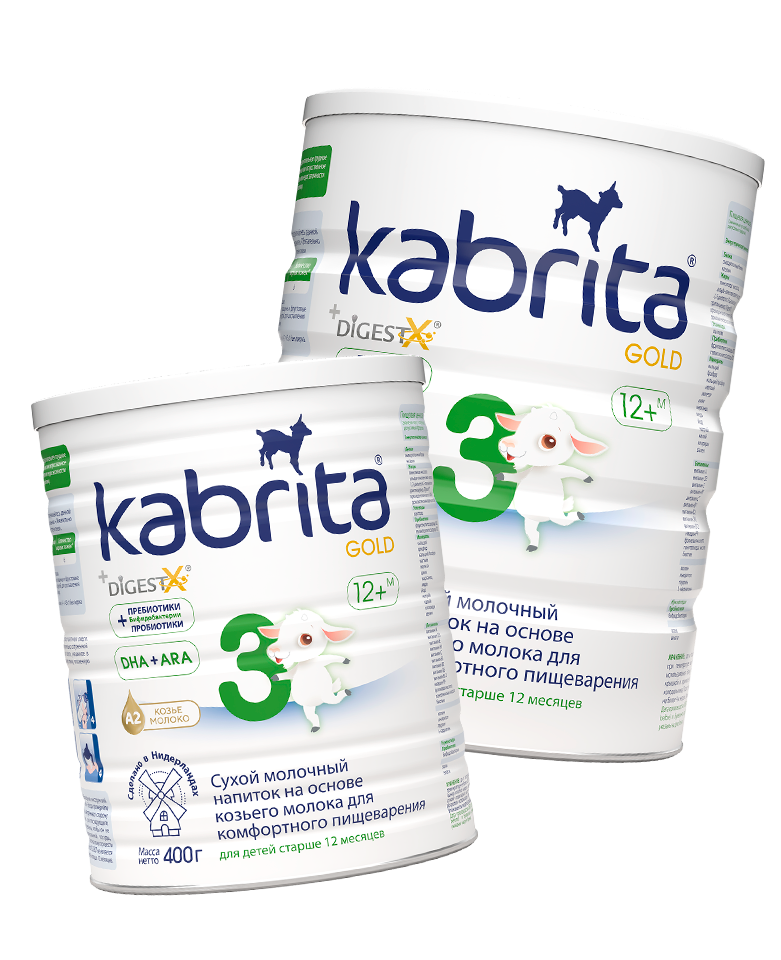
During the second year of life, a child continues to grow – on average, height increases by about 12 cm and weight by 2.5-3 kg. At this stage, children require sufficient energy and nutrients to support both physical and brain development. Studies by pediatricians involving nearly 2,000 children in their second year of life have shown that their diets often deviate significantly from the principles of balanced nutrition. Almost 70% of children consume insufficient amounts of vegetables, fruits, meat, and dairy products. This is largely because, after the age of one, parents begin introducing more “adult” foods. As a result, children may eat more in volume, but the nutritional value of their diet decreases. Milk drinks designed for children over one year help reduce the protein load associated with unadapted cow milk while compensating for essential nutrient intake. Two servings of Kabrita® 3 per day provide 54% of the daily calcium requirement, 40% of iron, and 54% of vitamin D3. Two servings of Kabrita® 4 provide 58% of calcium, 68% of iron, and 53% of vitamin D3 (as a percentage of daily requirements). Kabrita® milk drinks offer balanced, complete, and gentle nutrition for children of 12 months of age and older. Produced in the Netherlands.
What makes Kabrita® cereals special?
What makes Kabrita® cereals special?
• They are made exclusively with formula base, which ensures gentle and delicate digestion for your baby. Thanks to the formula, the cereals have an exceptionally smooth texture and a mild, creamy taste.
• They contain the DigestX® fat complex and FOS prebiotics to support more comfortable digestion and a healthy immune system.
• They are enriched with a comprehensive vitamin and mineral complex.
• The single-grain, gluten-free buckwheat and rice cereals from Kabrita® are ideal as a first grain-based complementary food.
• Kabrita® single-grain and multigrain cereals with fruit make a great addition to your baby's menu from five months onward.
• The "gentle grain breakdown" technology eases digestion and preserves the natural sweetness of the grains. Thanks to this technology, Kabrita cereals have a light, airy texture and mix perfectly with water.
• Made without added crystalline sugar.
• Contain no artificial flavors, colorings, or GMOs.
How to prepare the cereal?
Preparation instructions are provided on the packaging of Kabrita® cereals:
• Wash your hands thoroughly before preparing the cereal.
• Pour the specified amount of boiled water, cooled to 40°C (104°F), into a clean bowl.
• Add the recommended amount of dry cereal. You can make the cereal slightly thicker for feeding from a bowl by increasing the amount of dry product while using the same volume of water.
• For bottle feeding, follow the exact instructions on the packaging.
• Stir the cereal thoroughly until completely dissolved and begin feeding immediately. Always check the temperature of the prepared cereal before feeding, using a clean spoon.
• Introduce the new product starting with one teaspoon, gradually increasing the portion size.
• Do not leave leftover cereal for later feeding.
How many servings are there in one cereal box?
The number of servings depends on the baby's age and feeding volume – one package can make up to 5–6 servings of cereal, each serving up to 200 ml.
Kabrita® Purees. What is the difference between a puree and a pudding?
Our fruit purees are made from organic fruits with the addition of delicate goat milk cream. They have a vibrant, bold flavor and are sure to be a hit with your little one. The purees are prepared without added crystalline sugar or starch. The convenient pouch packaging helps support your baby's motor skill development and encourages self-feeding.
The puddings are also fruit puree-based, but in addition to goat milk cream, they contain a variety of grains. This makes them a delicious, satisfying, and nutritious dessert from Kabrita®. The combination of wholesome grains and fruit delivers a lovely flavor and a natural energy boost for little gourmands!
What are the benefits of Kabrita® baby biscuits?
Kabrita® baby biscuits are made with gentle and wholesome A2 goat milk. The biscuits dissolve easily in the mouth, so you can either give them directly to your little one to hold, or first dissolve them in a warm liquid to create a delicious dessert. They make an excellent first finger food, perfectly sized for little hands.
• Organically produced in Europe;
• Safe for babies – dissolves easily in the mouth;
• Made using a gentle baking technology;
• Enriched with vitamins and minerals;
• No palm oil, artificial flavors, or sweeteners. GMO-free;
• Convenient packaging with a resealable lock.
Where should legal entities address regarding cooperation with the Kabrita® brand representative office in Russia?
Please, feel free to contact us via e-mail: kabrita@kabrita.ru. We will address your enquiry to the sales department and reach out to you later.
Are Kabrita® goods available for wholesale purchase by private individuals directly from the representative office?
Unfortunately, we do not trade directly with private individuals. Our goods are available on our website, large retail chains, supermarkets, specialized baby product stores, and marketplaces. You may find a list of stores with products available on our website and place an order with the most convenient option.
Who should be contacted regarding joint advertising with the Kabrita® brand?
Please, feel free to contact us via e-mail: kabrita@kabrita.ru. We will address your enquiry to the marketing department and reach out to you later.
Oligosaccharides
Oligosaccharides are complex carbohydrates naturally present in breast milk.
They support the composition and activity of the gut microbiota, help maintain the immune system, and provide protection against pathogens*.
Babies receive oligosaccharides through breast milk or infant formula. Kabrita® formulas are made from fresh goat milk, which contains more than six times the level of oligosaccharides found in cow milk**.
*Gibson, G.R., et al., Expert consensus document: The International Scientific Association for Probiotics and Prebiotics (ISAPP) consensus statement on the definition and scope of prebiotics. Nat Rev Gastroenterol Hepatol, 2017. 14(8): p. 491-502.
** Martinez-Ferez, A., et al., Goats’ milk as a natural source of lactose-derived oligosaccharides: Isolation by membrane technology. International Dairy Journal, 2006. 16(2): p. 173-181.
Prebiotics GOS and FOS
Prebiotics are organic, non-digestible plant fibers belonging to the carbohydrate class. GOS (galacto-oligosaccharides) are derived from milk lactose, while FOS (fructo-oligosaccharides) are derived from chicory.
Prebiotics stimulate the growth and activity of beneficial bacteria, supporting a healthy gut microbiota, normal digestion, and regular bowel movements*.
They are obtained through nutrition – via breast milk or Kabrita® formulas enriched with GOS and FOS, as well as the probiotic Bifidobacterium animalis subsp. lactis, making this combination more effective.
* Macfarlane, G.T., H. Steed, and S. Macfarlane, Bacterial metabolism and health-related effects of galacto-oligosaccharides and other prebiotics. J Appl Microbiol, 2008. 104(2): p. 305-44.
Probiotics Bifidobacterium animalis subsp. lactis (Bifidobacterium BB-12®)
Probiotics are beneficial live microorganisms that inhabit the human body.
Bifidobacterium animalis subsp. lactis is one of the most studied and safe probiotics, with clinically proven benefits.
Probiotics are naturally present in breast milk. Kabrita® formulas are enriched with Bifidobacterium animalis subsp. lactis, which*:
• Inhibit the growth of pathogenic bacteria;
• Support immune system development;
• Aid digestion;
• Help soften and ease bowel movements.
* Chen, Y.L., et al., A Prebiotic Formula Improves the Gastrointestinal Bacterial Flora in Toddlers. Gastroenterol Res Pract, 2016. 2016: p. 3504282.
Nucleotides
Nucleotides are organic compounds that serve as the building blocks of DNA and RNA. They are present in breast milk and are added to infant formulas.
They play a key role in genetic processes and DNA synthesis, support energy metabolism, immune function, cellular metabolism, and gut microbiota, and contribute to better and longer sleep*.
Although nucleotides are synthesized by the body, supplementation is beneficial during the rapid growth of the first year of life. Kabrita® formulas contain 4-5 times more naturally occurring nucleotides than cow milk-based formulas, bringing them closer to breast milk**.
* Hess, J. R. and N. A. Greenberg. The Role of nucleotides in the immune and gastrointestinal systems potential clinical applications. Nutrition in Clinical Practice, 2012. 27 (2): p. 281- 294.
** Pellis, L.T, and B.H., Naturally high content of nucleotides in goat milk based infant formula. Poster presented at ESPGHAN, Geneva, Switzerland, 2018
A2 Milk
A2 milk – breast milk and goat milk – differs from standard A1 cow milk in the structure of casein proteins. Casein is a dense protein that is more difficult to digest.
A2 milk is gentler on infants’ digestive systems, supporting more comfortable digestion and better nutrient absorption*.
*Pal, S., et al. , Milk In tolerance, Beta-Casein and Lactose. Nutrien ts, 2015. 7(9): p. 7285- 97
Vitamin D3
Vitamin D3 is a bioactive compound produced in the skin under sunlight exposure and obtained from food.
It is essential for infants, as it plays a key role in:
· Bone formation and strength;
· Muscle tone and coordination;
· Reducing the risk of rickets;
· Supporting the immune system and fighting infections.
Kabrita® formulas are enriched with vitamin D3. For additional supplementation, consult your pediatrician, as daily requirements depend on the volume of formula consumed.
Calcium
Calcium (Ca) is a micronutrient obtained through nutrition.
It is a key component of hair, teeth, nails, muscles, and ligaments, and is essential for the development of:
• The musculoskeletal system;
• Bone tissue;
• Neural connections;
• Memory.
Goat Milk
Goat milk and goat milk-based formulas used in Kabrita® have proven advantages compared to cow milk.
Goat milk is more similar to breast milk:
• Like breast milk, it is A2 milk and is easier to digest than A1 cow milk;
• It has the same apocrine secretion mechanism as breast milk, supporting the presence of more active nutrients.
• Goat milk and formulas based on it are digested and absorbed more easily than cow milk, promoting more comfortable digestion.
Clinical studies confirm that Kabrita® formulas help reduce the frequency and intensity of colic, constipation, gas, and regurgitation*.
* Borovik, T.E., et al., Voprosy sovremennoi pediatrii, 2014
Kabrita® Biscuits
Kabrita® biscuits are a tasty and gentle first finger food, ideal for snacks, developing fine motor skills, and introducing new flavors. Made in Italy from selected wheat varieties and A2 goat milk using gentle baking technology.
They are completely safe for babies, dissolve easily in the mouth, and can be consumed dry or dissolved in water or milk. Enriched with vitamins and minerals. Palm oil free.
Omega Fatty Acids (ω-3 and ω-6)
DHA (ω-3) and ARA (ω-6) are essential fatty acids required for brain and visual development.
Since the brain consists of approximately 60% fat (dry matter), adequate intake of high-quality fats is critical. Infants cannot synthesize sufficient DHA and ARA on their own, making dietary intake essential.
All Kabrita® formulas contain age-appropriate levels of these important fatty acids.
Kabrita® Cereals
Kabrita® cereals combine the benefits of grains with goat milk-based formula, supporting growth and development. Using formula instead of regular milk makes them gentler on digestion and reduces stress when transitioning to thicker foods.
They are typically introduced between 4 and 6 months – during the optimal window for introducing complementary foods – when additional nutrients are needed.
Kabrita® Purees
Kabrita® purees are 100% natural and made from organic fruits with added goat milk cream. Convenient, hygienic packaging supports fine motor skill development and independence. A variety of flavors helps develop taste preferences and encourages a diverse diet.
Recommended for children from 6 months and older, with no added sugar.
Kabrita® Puddings
Kabrita® puddings are 100% natural, nutritious products made from grains, organic fruits, and goat milk cream. Convenient packaging supports independence and motor development, while variety of tastes encourages healthy eating habits.
Recommended from 6 months of age, with no added sugar.
Kabrita® Formulas
Kabrita® formulas are produced in the Netherlands from fresh goat milk. They combine the benefits of goat milk with a premium composition enriched with modern functional ingredients. They support easier digestion and nutrient absorption, promoting overall digestive comfort.
Recommended for healthy infants from birth in cases of insufficient or absent breast milk.


 Information about pregnancy and child care
 Secret promo codes and games